Collect
We gather food and household essentials that would otherwise go unused.
- Community food and supply drives
- Surplus from grocers and local businesses
- Direct donations from families and schools
- Funded purchases to fill the gaps
Surplus goes in one end. A packed Reach Box comes out the other.
One loop, run as many times as we can.
We gather food and household essentials that would otherwise go unused.
We sort, date-check, and assemble ready-to-use Reach Boxes.
We hand off through partners who know which families need what, and when.
Collect, prepare, deliver. Run it enough times and it turns into 500+ supplies and 300+ families.
No clever trick. The hard part is showing up on a 96-degree Saturday, sorting six pallets, and doing it again three weeks later.
What we do optimize: nothing usable wasted, boxes that match what families actually cook with, and partners who never have to chase us.
Help us run it
A quick check before you drop off saves hours of sorting.
Sealed, in-date, and shelf-stable.
These can’t safely go into a box.
Built to carry a family of four through about a week, plus the household basics food banks often can’t cover.
Adjusted per partner request — family size, dietary needs, and infant supplies change what goes in.
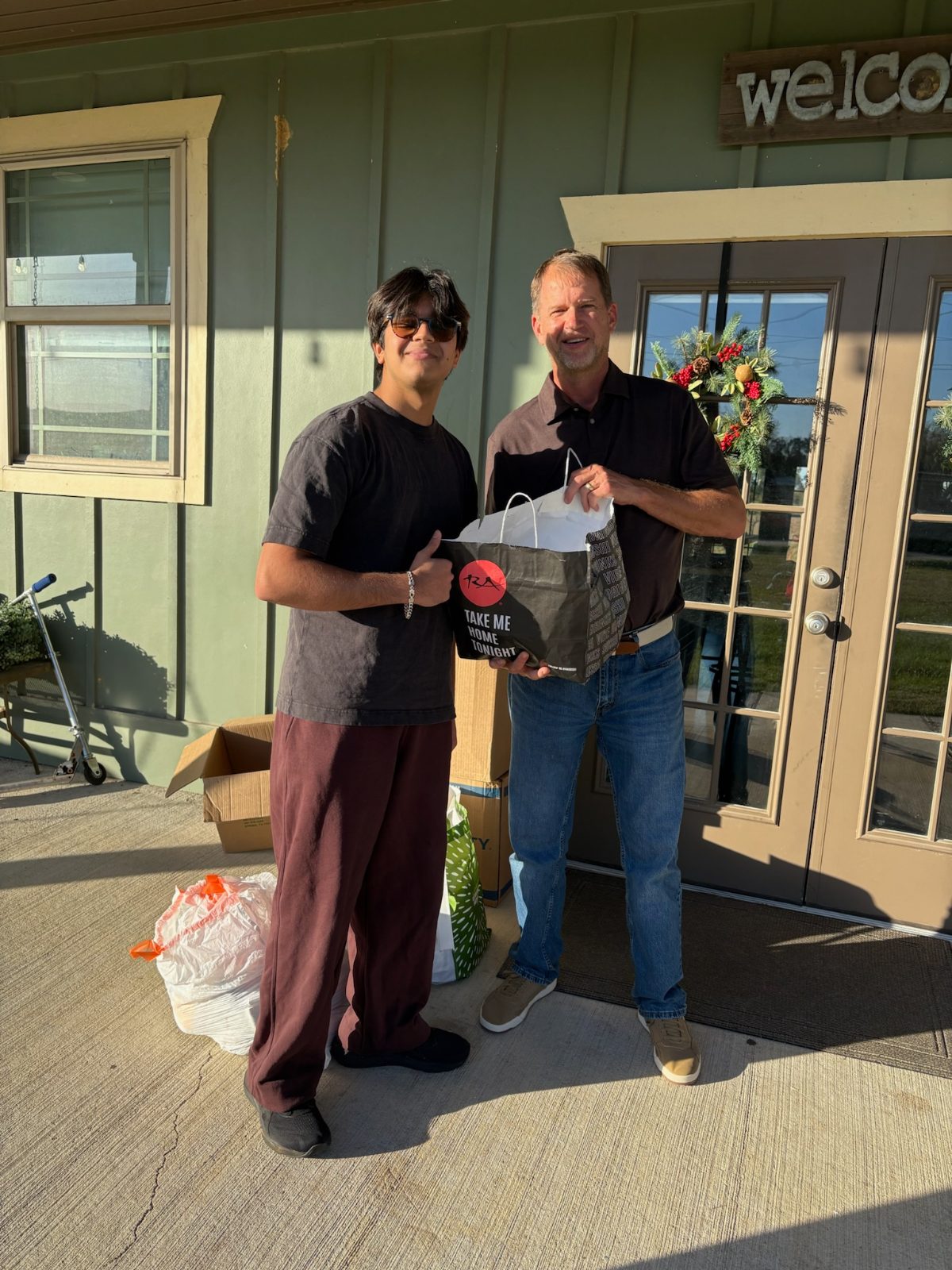
Everything is routed through our community partners — currently Cy-Fair Helping Hands of Hope and Abbas House. They identify the families, we supply the boxes, and distribution happens on site with our volunteers present.
Yes. Global Refugee Reach is a registered 501(c)(3) nonprofit organization, so monetary and in-kind donations are tax-deductible to the extent allowed by law. Ask us for a receipt at drop-off or after an online gift.
Absolutely — it’s one of the most useful things you can do for us. Get in touch and we’ll send a one-page list of the most needed items, printable flyers, and coordinate the pickup.
Not right now. We’re focused on food, hygiene, and household essentials because that’s what we can move quickly and store safely. For clothing and furniture, our partners can usually point you to the right organization.
We don’t run our own intake process. Families are served through our partner organizations, who already know their communities. If you’re a family in need, contact Cy-Fair Helping Hands of Hope or Abbas House directly — or reach out and we’ll help point you in the right direction.
We’re student-run, so students are exactly who we’re built for. Volunteers under 16 should be accompanied by an adult at drives and distributions. Service hours can be documented on request.
Donate supplies, fund a box, or sort with us on a Saturday.